
Pedagogical Systems Laboratory

Collaborative Learning Circles for engineered collective cognition
Mission.
PSL designs teaching as collective cognition under explicit ethical constraints. Core invention: Collaborative Learning Circles (CLCs) that combine high-certainty learning-science levers with bounded, non-clinical group-process techniques to maximize concept mastery, transfer, and professional identity formation. This integration optimizes cognitive load and durable schema formation while reducing perceived threat and supporting executive control required for complex material (Vygotsky, 1978; Dewey, 1938; Bruner, 1960; Johnson, Johnson, & Smith, 2007; Freeman et al., 2014; Sweller, 1988; Karpicke & Roediger in Roediger & Karpicke, 2006; LeDoux, 2012; Phelps, 2006; Pessoa, 2013; Yalom & Leszcz, 2020; Edmondson, 1999).
CLCs adapt only pedagogically validated moves. Norm-setting. Structured turn-taking. Here-and-now process checks. Cohesion for task efficacy. Real-time feedback. All disclosed, time-boxed, non-biographical, and tied to academic aims.
Lineage. Vygotsky on mediation. Dewey on inquiry as disciplined experience. Bruner on spiral revisitation. Engeström on activity. Lave and Wenger on communities of practice. Freire on dialogic rigor without paternalism. Habermas on discourse norms. Mazur on peer instruction. Constraints against unguided discovery from Kirschner, Sweller, and Clark (Engeström, 1987; Lave & Wenger, 1991; Freire, 1970; Habermas, 1984; Mazur, 1997; Kirschner, Sweller, & Clark, 2006).
Checklist — mission
- Assumptions: learning is situated, social, effortful, affect-dependent, assessment-sensitive.
- Limits: time, prior knowledge, institutional incentives.
- Predictions: CLCs outperform standard seminars and ad-hoc groups on near and far transfer and on persistence.
Core philosophy and stance
My teaching is Socratic and concept-first. I introduce minimal definitions with boundary and counter-examples, externalize structure on the board to create a collective working memory, and close with a synthesis that ties student productions to the canonical model. Philosophically this follows Dewey on inquiry as disciplined experience, Vygotsky on mediated learning and ZPD, Habermas on discourse norms of reason-giving, and Freire on dialogic rigor without paternalism. Empirically I use spaced retrieval and interleaving to stabilize schemas, cognitive-load-aware worked examples with fading to prevent overload, and peer instruction to surface and correct misconceptions before consolidation. Assessment separates mastery evidence from process diagnostics via analytic rubrics, structured oral transfer tasks, delayed retrieval checks, and low-stakes formative quizzes. Engagement is engineered as psychological safety with accountability through explicit turn-taking, equal airtime targets, and non-retaliation norms. The rationale is consistent and testable. Conditions that reduce perceived threat and manage load allow effortful practice and feedback to do their work, producing durable understanding and equitable participation (Dewey, 1938; Vygotsky, 1978; Habermas, 1984; Freire, 1970; Roediger & Karpicke, 2006; Sweller, 1988; Mazur, 1997; Edmondson, 1999; Pessoa, 2013).
Posts

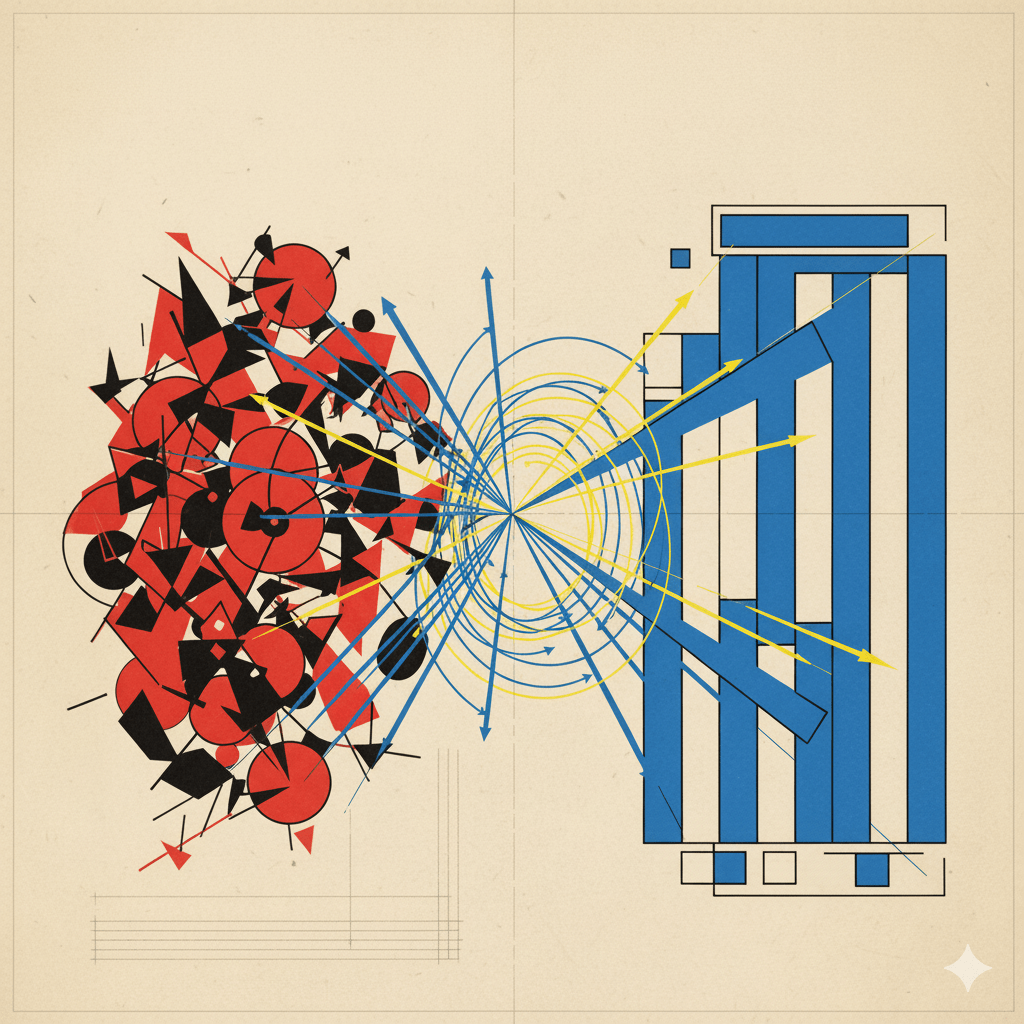



Implementation at scale
Nested CLCs in large courses with trained GTAs. Fidelity decks, checklists, and weekly supervision. Digital supports include polling, collaborative whiteboards, and scheduled asynchronous reflections for spacing. Rollout proceeds pilot to crossover to program-level institute.
Checklist — scale
- Assumptions: protocolization preserves quality across instructors.
- Predictions: replicable outcomes after two implementation cycles.
Evidence and mechanisms
- Active learning. Reduces failure rates and raises exam performance across fields by enforcing effortful processing and retrieval over passive reception (Freeman et al., 2014).
- Cooperative structures. Outperform competitive and solo designs when tasks require interdependence through positive goal interdependence and promotive interaction (Johnson et al., 2007; Slavin, 1995).
- Retrieval, spacing, interleaving. Spaced retrieval enhances retention and aligns with reconsolidation accounts of memory updating; interleaving improves feature discrimination and transfer (Roediger & Karpicke, 2006; Cepeda et al., 2006; Nader & Hardt, 2009; Rohrer & Taylor, 2007; Kornell & Bjork, 2008).
- Cognitive Load Theory. Define intrinsic, extraneous, germane load. CLCs minimize extraneous load, calibrate intrinsic load via micro-lectures and boundary examples, and increase germane load via worked-example fading and coached practice (Sweller, 1988; Atkinson et al., 2000; Kirschner, Sweller, & Clark, 2006).
- Affect and control. Lower perceived threat supports executive control under effortful tasks; anxiety impairs attentional control when unmanaged (LeDoux, 2012; Phelps, 2006; Pessoa, 2013; Eysenck & Derakshan, 2011).
- Motivation. SDT needs are targeted by protocol design to sustain intrinsic motivation in rigorous settings (Ryan & Deci, 2000).
Checklist — evidence
- Assumptions: effects compound when load constraints and safety norms are respected.
- Limits: instructor fidelity and assessment quality.
- Predictions: at least 0.3 SD advantage on concept inventories and structured orals versus baseline seminars.
The CLC protocol
Closed loop for a stable cohort on a fixed cadence
- Check-in. Brief round to lower affective filters and extraneous load and to orient attention to task (Edmondson, 1999; Eysenck & Derakshan, 2011).
- Concept spine micro-lecture. Minimal definitions with boundary and counter-examples to prime schemas and set intrinsic load.
- Peer-instruction cycles. Concept questions, peer discussion, and fair cold-calling to surface misconceptions and force elaborative retrieval and productive socio-cognitive conflict (Mazur, 1997).
- Deliberate practice. Worked-example use followed by fading to manage germane load and automation without overload (Sweller, 1988; Atkinson et al., 2000).
- Process reflection. Structured round on participation dynamics and blockers using Self-Determination Theory levers of relatedness, competence, and autonomy for task engagement (Ryan & Deci, 2000).
- Commit-to-action synthesis. Consolidation and next steps.
Procedural safeguards
- Speech rules. Rapoport–Dennett steel-man before critique and one-breath one-point to prevent dominance and derail (Dennett, 2013).
- Rotating roles. Facilitator, Skeptic, Scribe, Integrator.
- Educational boundaries. Confidentiality applies to academic work only. No diagnosis. No trauma processing. Immediate referral when non-task distress arises (Yalom & Leszcz, 2020).
- Psychological safety. Equal airtime over time, non-retaliation for dissent, task-focused candor. These norms lower perceived social threat and support cognitive control during high-demand tasks (Edmondson, 1999; Pessoa, 2013).
Checklist — protocol
- Assumptions: structure beats ad-hoc; safety multiplied by accountability yields learning.
- Limits: class size and instructor bandwidth.
- Predictions: higher normalized gains, lower subgroup variance, fewer withdrawals.
Assessment and research plan
Pre-registered, prospective evaluation. Confirmatory analyses pre-specified. Exploratory analyses labeled as such. IRB sought when use exceeds quality improvement.
Outcomes. Near and far transfer, delayed retention, participation equity, and persistence. Participation equity indexed by airtime balance, turn-taking variance, and discourse-graph centrality as pragmatic proxies for fair discourse conditions.
Design. Baseline equals traditional seminar with same instructor and readings. Ablation-1 removes process-reflection. Ablation-2 removes peer instruction but retains practice. Full equals complete CLC loop.
Analysis. Mixed models with cluster correction and pretest covariates. Qualitative coding of process rounds to triangulate mechanisms. Structured oral exams use analytic rubrics to increase reliability and validity (Newble & Swanson, 1988).
Checklist — assessment
- Assumptions: baselines and ablations isolate component contributions.
- Limits: institutional heterogeneity.
- Predictions: Full greater than Baseline and Full greater than Ablations by at least 0.3 SD; participation inequality decreases term over term.
Selected References
- Atkinson, R. K., Derry, S. J., Renkl, A., & Wortham, D. (2000). Review of Educational Research, 70, 181–214.
- Black, P., & Wiliam, D. (1998). Assessment in Education, 5, 7–74.
- Bruner, J. S. (1960). The Process of Education. Harvard.
- CAST. (2018). UDL Guidelines 2.2.
- Cepeda, N. J., Pashler, H., Vul, E., Wixted, J. T., & Rohrer, D. (2006). Psychological Bulletin, 132, 354–380.
- Dennett, D. (2013). Intuition Pumps and Other Tools for Thinking. Norton.
- Dewey, J. (1938). Logic: The Theory of Inquiry. Holt.
- Edmondson, A. (1999). Administrative Science Quarterly, 44, 350–383.
- Engeström, Y. (1987). Learning by Expanding. Orienta-Konsultit.
- Eysenck, M. W., & Derakshan, N. (2011). Emotion, 11, 968–980.
- Freeman, S., et al. (2014). PNAS, 111, 8410–8415.
- Freire, P. (1970). Pedagogy of the Oppressed. Herder and Herder.
- Habermas, J. (1984). The Theory of Communicative Action, Vol. 1. Beacon.
- Hattie, J., & Timperley, H. (2007). Review of Educational Research, 77, 81–112.
- Johnson, D. W., Johnson, R. T., & Smith, K. A. (2007). Educational Psychology Review, 19, 15–29.
- Kirschner, P. A., Sweller, J., & Clark, R. E. (2006). Educational Psychologist, 41, 75–86.
- Kornell, N., & Bjork, R. A. (2008). Psychological Science, 19, 585–592.
- Ladson-Billings, G. (1995). American Educational Research Journal, 32, 465–491.
- Lave, J., & Wenger, E. (1991). Situated Learning. Cambridge.
- LeDoux, J. (2012). Neuron, 73, 653–676.
- Mazur, E. (1997). Peer Instruction. Prentice Hall.
- Nader, K., & Hardt, O. (2009). Nature Reviews Neuroscience, 10, 224–234.
- Newble, D., & Swanson, D. (1988). Medical Education, 22, 325–334.
- Phelps, E. A. (2006). Annual Review of Psychology, 57, 27–53.
- Pessoa, L. (2013). The Cognitive-Emotional Brain. MIT Press.
- Roediger, H. L., & Karpicke, J. D. (2006). Psychological Science, 17, 249–255.
- Rohrer, D., & Taylor, K. (2007). Applied Cognitive Psychology, 21, 857–867.
- Ryan, R. M., & Deci, E. L. (2000). American Psychologist, 55, 68–78.
- Slavin, R. E. (1995). Cooperative Learning, 2nd ed. Allyn & Bacon.
- Sweller, J. (1988). Cognitive Science, 12, 257–285.
- Tuckman, B. W. (1965). Psychological Bulletin, 63, 384–399.
- Vygotsky, L. S. (1978). Mind in Society. Harvard.
- Yalom, I. D., & Leszcz, M. (2020). The Theory and Practice of Group Psychotherapy, 6th ed. Basic Books.
 Andreas S. Savva | Savva Laboratories